The primary reason I wanted to start the Respect and Restore Society was so we could take on larger cemetery restoration projects. Well, I think I may have gotten more than I bargained for with this one!
One of our members told me about an abandoned cemetery in Senatobia, Mississippi. She had noticed some headstones from the road and wanted me to take a look. I had actually heard about this cemetery years earlier, but quite honestly, I had forgotten all about it. I remembered reading about it in one of Louise Fox’s books, Old and Abandoned Cemeteries in West Tate County, Mississippi: And Some Other Cemeteries in Other Parts of Tate County.
In her book, it was referred to as “Near the Poor House Cemetery” or “Old Poor House Cemetery.”
In October 2025, we finally made plans to go see it.
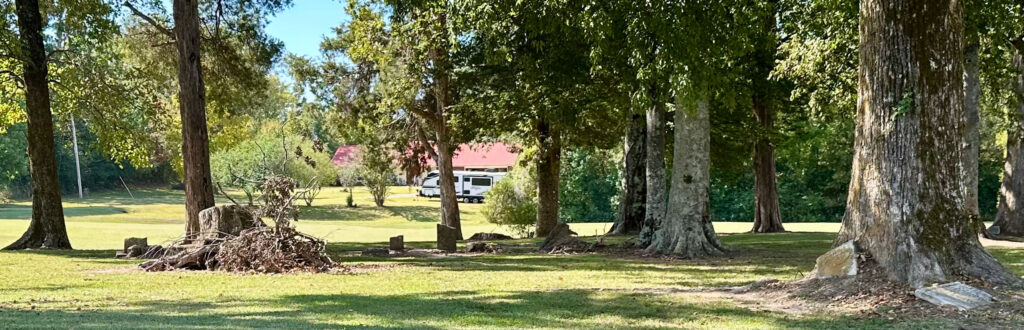
What we could see from the road wasn’t even half of it.
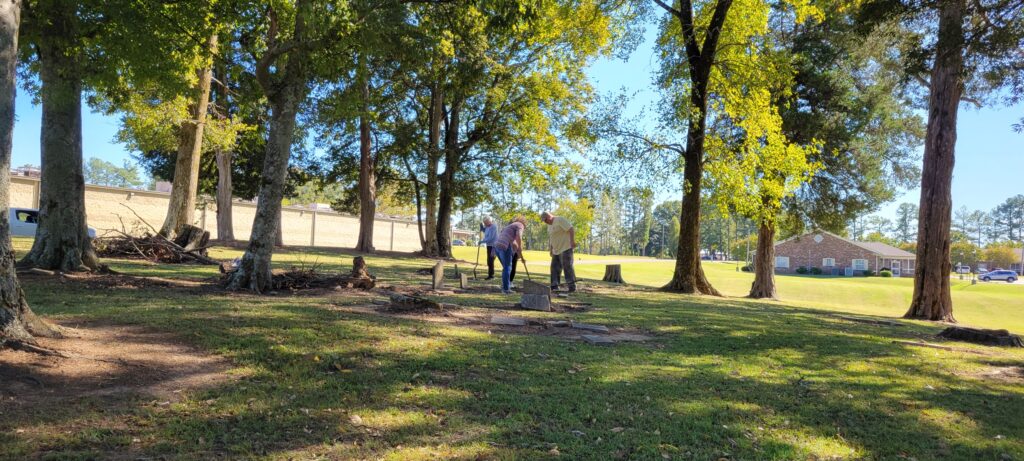
At first glance, you might not even realize how bad things are. The grass is maintained, and from a distance, it looks like a peaceful little cemetery. But take a closer look.
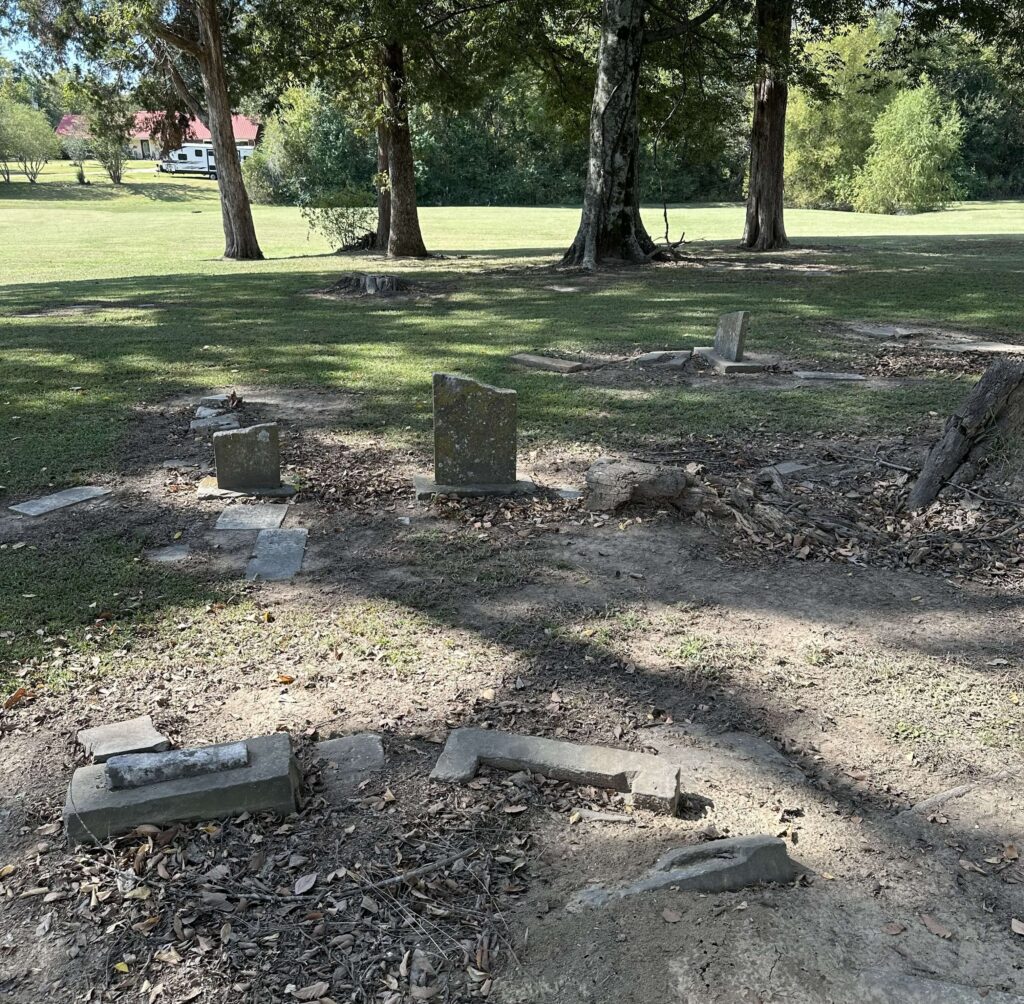
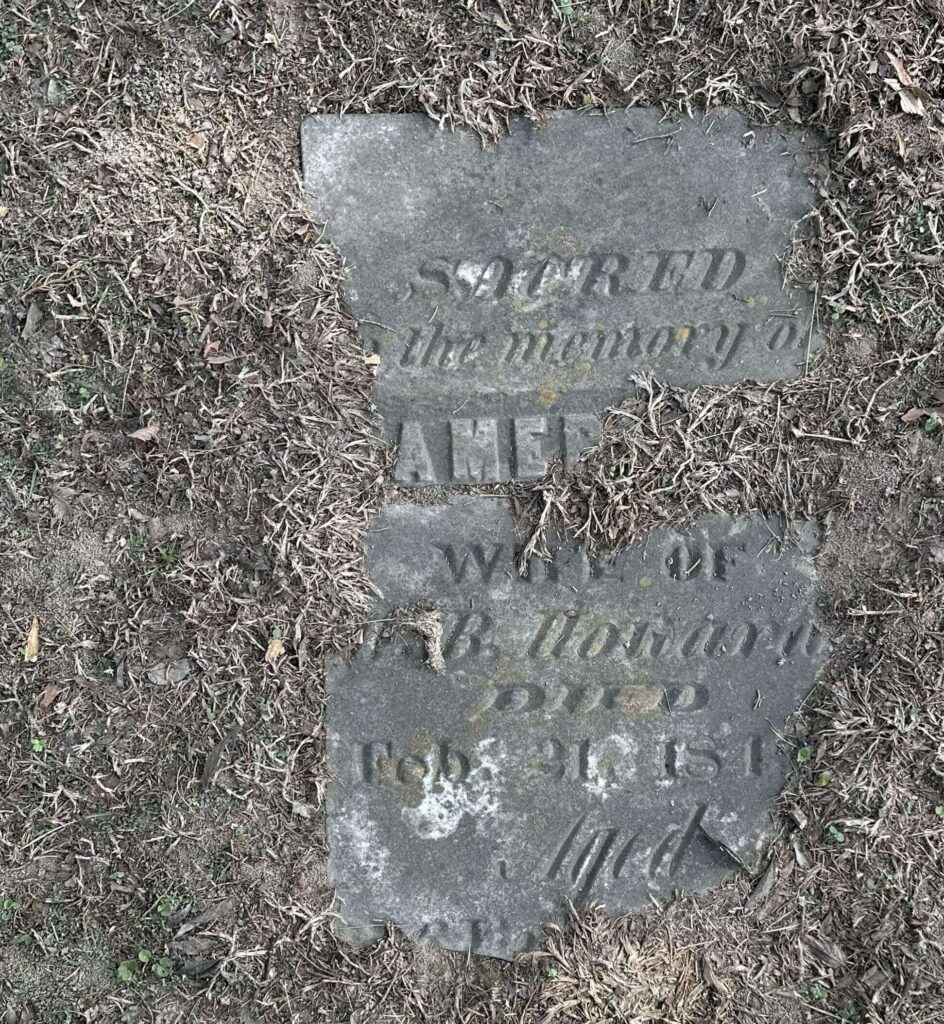
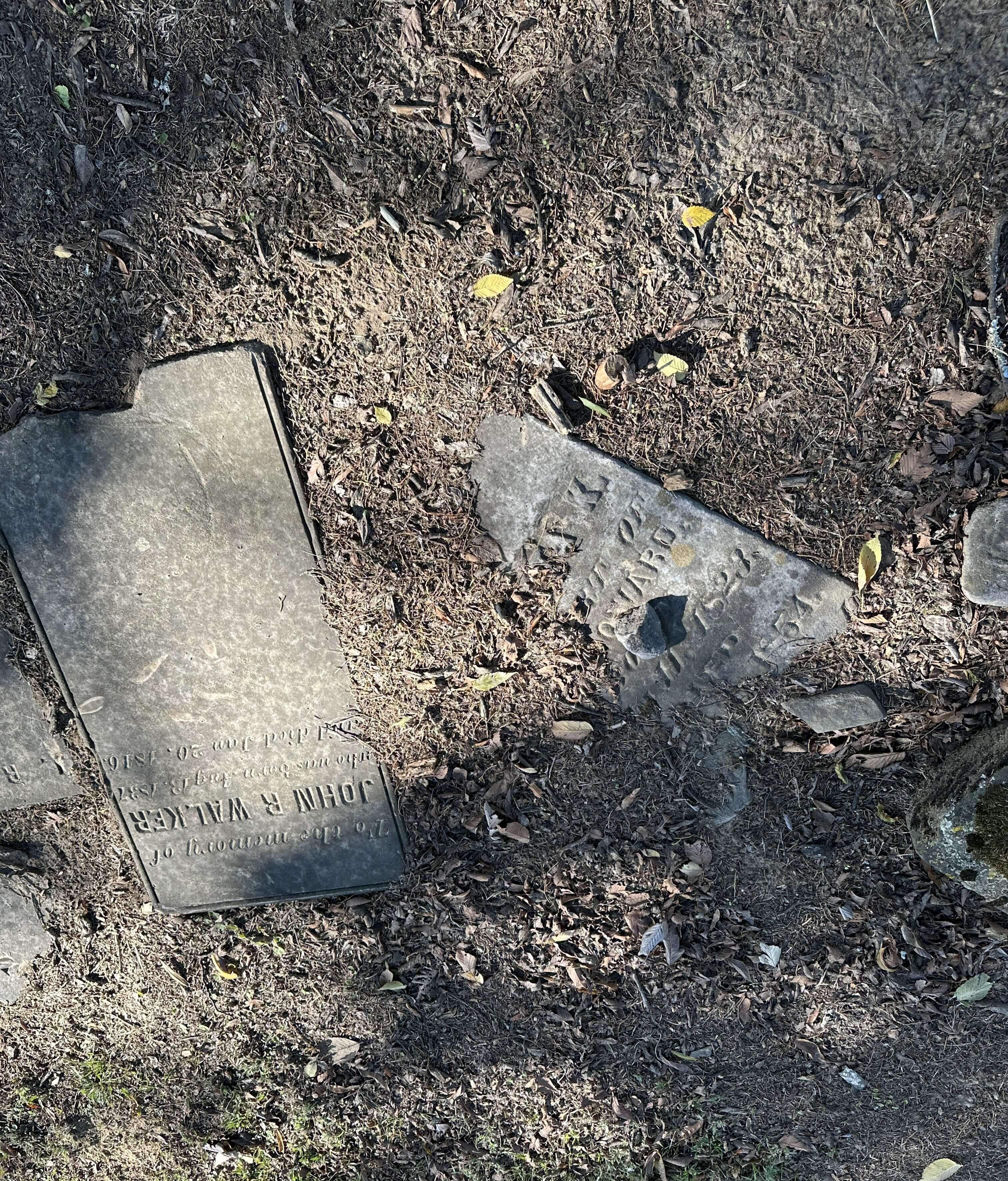
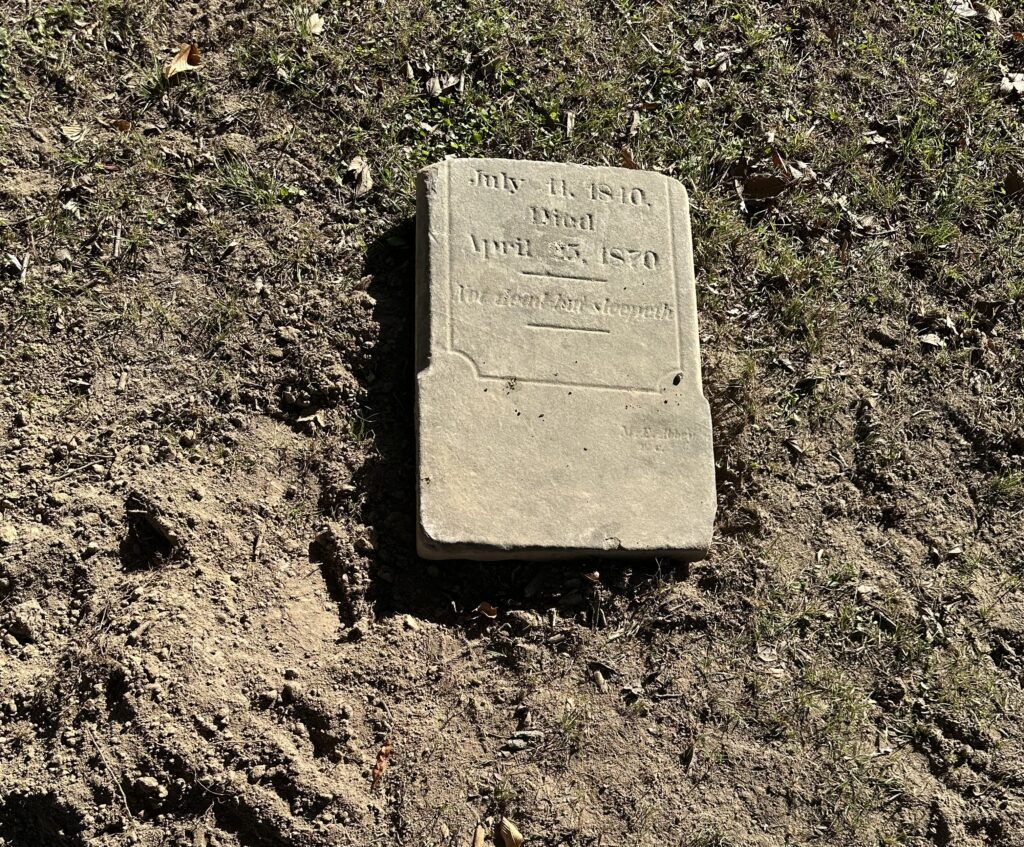
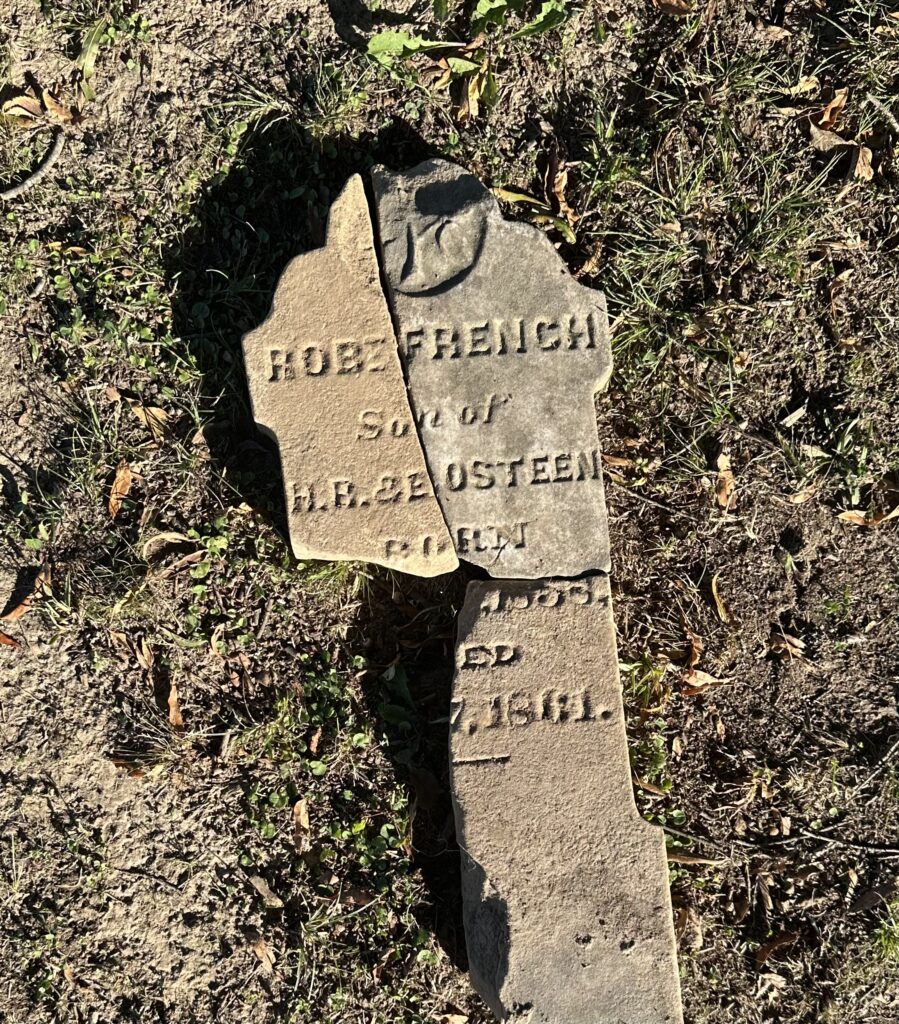
Broken monuments are scattered throughout the entire area. Some are leaning against trees, others are lying on the ground, and some are partially buried. The more we walked, the more we found. And what you see in these photographs is only a small portion of it.
I honestly could not believe what I was seeing. It was heartbreaking. I do not know what happened here or how these monuments came to be broken and scattered, but I could not help feeling that the people buried here had been forgotten.
These were not just broken pieces of stone to me. Each one represented someone who had lived, had a family, and had a story. Seeing them in this condition felt like a total disregard for those lives.
I had no idea where we would begin, but I knew we had to do something.
Where Do We Even Begin?
Our first thought was to uncover as many of the broken monuments as possible, especially those that were partially buried. We figured we could leave them where we found them and come back to reset them later.
That proved harder than we thought.
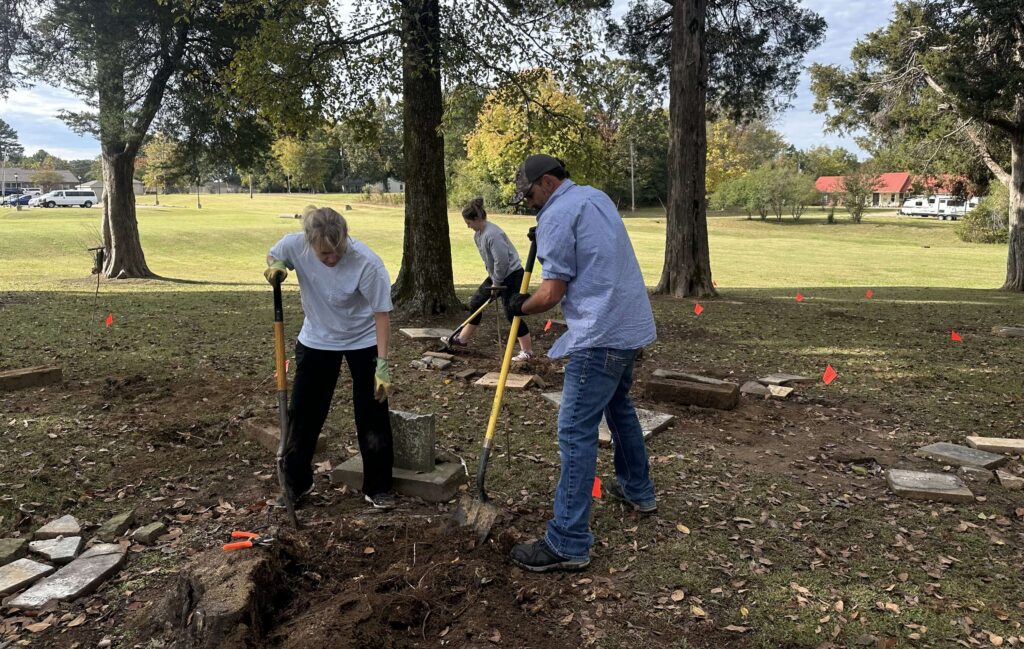
We planned a workday, and several of our members came out to help. We managed to uncover quite a few monuments, and we were careful to leave everything right where we found it.
Next, we started probing around the areas where we had found stones, hoping to locate missing pieces or bases. We did not have much luck because with so many trees, we were constantly hitting roots. We would get excited thinking we had found another buried stone, only to dig down and discover another tree root!
We realized we needed a better plan. We decided to map the cemetery and divide it into grids so we could keep track of which areas we had searched and which ones we hadn’t.
So, we learned how to map a cemetery.
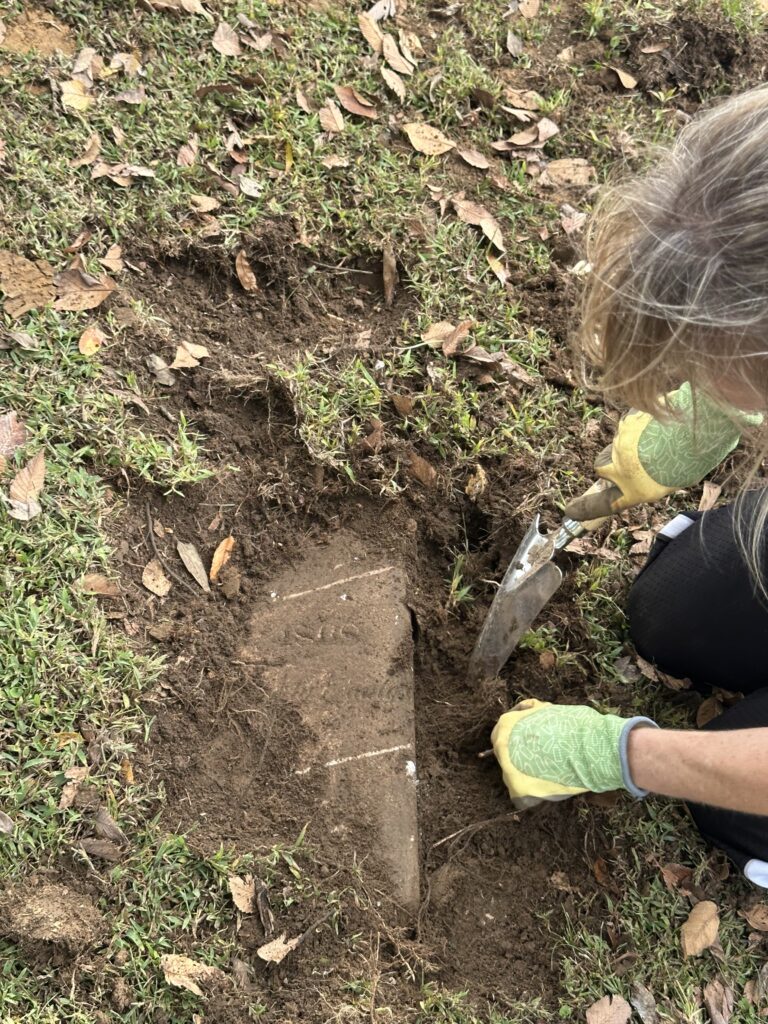
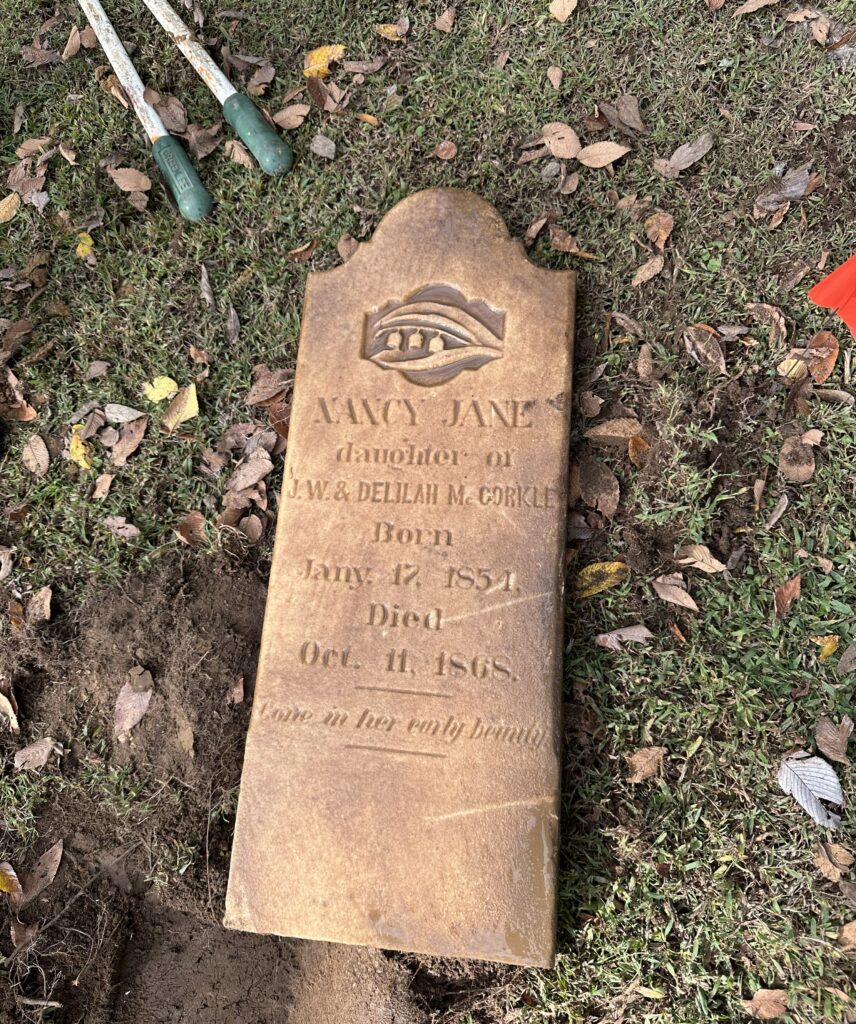
And our efforts began to pay off! While probing near a tree stump and some other headstones, we found an entire monument completely buried underground.
After all those tree roots, that was pretty exciting. It also made us wonder what else might be buried out there.
The monument belonged to Nancy Jane McCorkle, who died in 1868 at just 14 years old. It was amazing to find it completely intact after being buried for who knows how long. Discoveries like this make all the digging, probing, and frustration worthwhile.
A Little History and a Lot of Questions
In the meantime, I started researching the cemetery to learn more about the people buried there and how they might be connected.
I discovered that a man named John Howard came to Mississippi in the 1830s and owned several acres of land, including the property where the cemetery is located. I later found an 1873 tax roll, the year Tate County was established, that listed a one-acre piece of property in his daughter’s name. What really caught my attention was that it was specifically identified as a “graveyard.”
One acre! That got me thinking. Could there be more graves here than we know about? How many monuments might be missing or buried? And how many graves might never have had a marker at all?
Then there was the name of the cemetery.
There actually was a poor house nearby, which I suspect is how it came to be known as “Near the Poor House Cemetery.” But the more I researched the Howard and Haynes families, the more I questioned whether that name really represented the cemetery.
I could not find any official record giving the cemetery a name, and the people buried here appeared to have connections to the families who owned the land. So, I had the listing on Find a Grave changed to Howard/Haynes Cemetery. It seemed more fitting to give it a name that reflected the families and the history of the property.
As we have continued uncovering monuments, we have found several other surnames besides Howard and Haynes, including McCorkle, Miller, Nash, Floyd, Fitzgerald, and Walker. I have been able to find information about some of these individuals, but others are still a mystery. I am hoping that by sharing these names, someone might recognize a family connection and help us learn a little more about the people buried here.
We also have the bottom portions of two monuments with birth and death dates, but the tops with the names are missing. I’m hoping those pieces are still out there somewhere.
Putting the Pieces Together
After spending several days probing and searching, it became pretty clear that just because we found a piece of a monument in one spot did not mean that was where the person was actually buried.
In fact, we found the base of one monument near the road, another piece somewhere in the middle of the cemetery, and another piece all the way in the back!
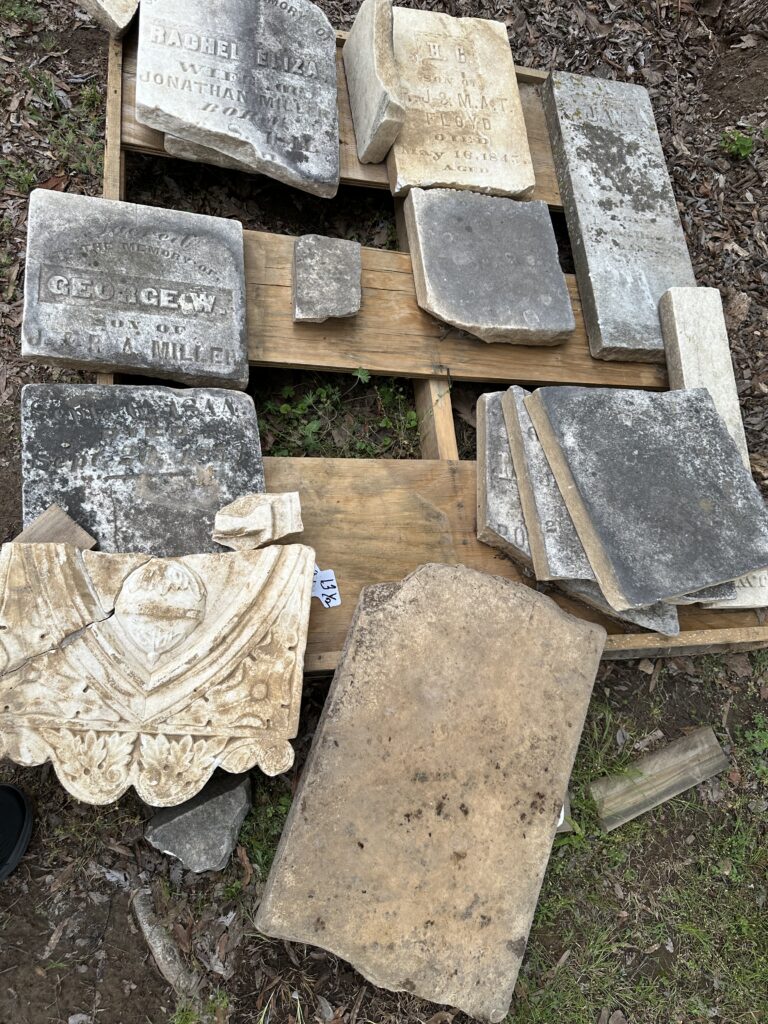
At that point, we realized there was no way to know where some of these monuments originally stood. So, we decided to change our approach and gather the broken monuments onto pallets. This would help protect them, keep the pieces together, and give us a chance to start matching and repairing them while we worked on getting ground-penetrating radar to help locate possible graves.
Hopefully, once we have a better understanding of what might be beneath the ground, we can decide how best to move forward with resetting the monuments.
Where We Go From Here
I will admit this project has been overwhelming at times. What I thought would be a matter of uncovering and resetting broken headstones has turned into something much bigger.
We have uncovered buried monuments, matched broken pieces, researched families, learned how to map a cemetery, and started resetting some of the stones. But there is still so much we do not know.
One of our biggest needs right now is ground-penetrating radar (GPR), which can help detect possible graves and other features beneath the ground. We are hoping it will give us a better idea of how many graves might be here and where they may be located before we go much farther with the restoration.
We also have plenty of monument repairs ahead of us, including putting broken stones back together and making replacement bases.
So, for now, things are moving a little slower than I would like. Not because we have given up, but because I want to make sure we are doing this as carefully as possible.
I do not know how long it will take to finish restoring Howard/Haynes Cemetery, but we have come too far to stop now.
There is so much more to share about this cemetery, from the history of the families buried here to the challenges of putting these broken monuments back together. I will be sharing more about our discoveries and restoration efforts as the work continues.
In the meantime, if anyone has information about the Howard, Haynes, Fitzgerald, Floyd, Walker, McCorkle, Miller or Nash families, this cemetery, or the old poor house in Senatobia, I would love to hear from you. Old photographs, family records, or even stories passed down through generations might help us answer some of the questions we still have.
I have a feeling there are still quite a few pieces of this puzzle waiting to be found – good thing I LOVE puzzles!!!